New in this edition: a selling track
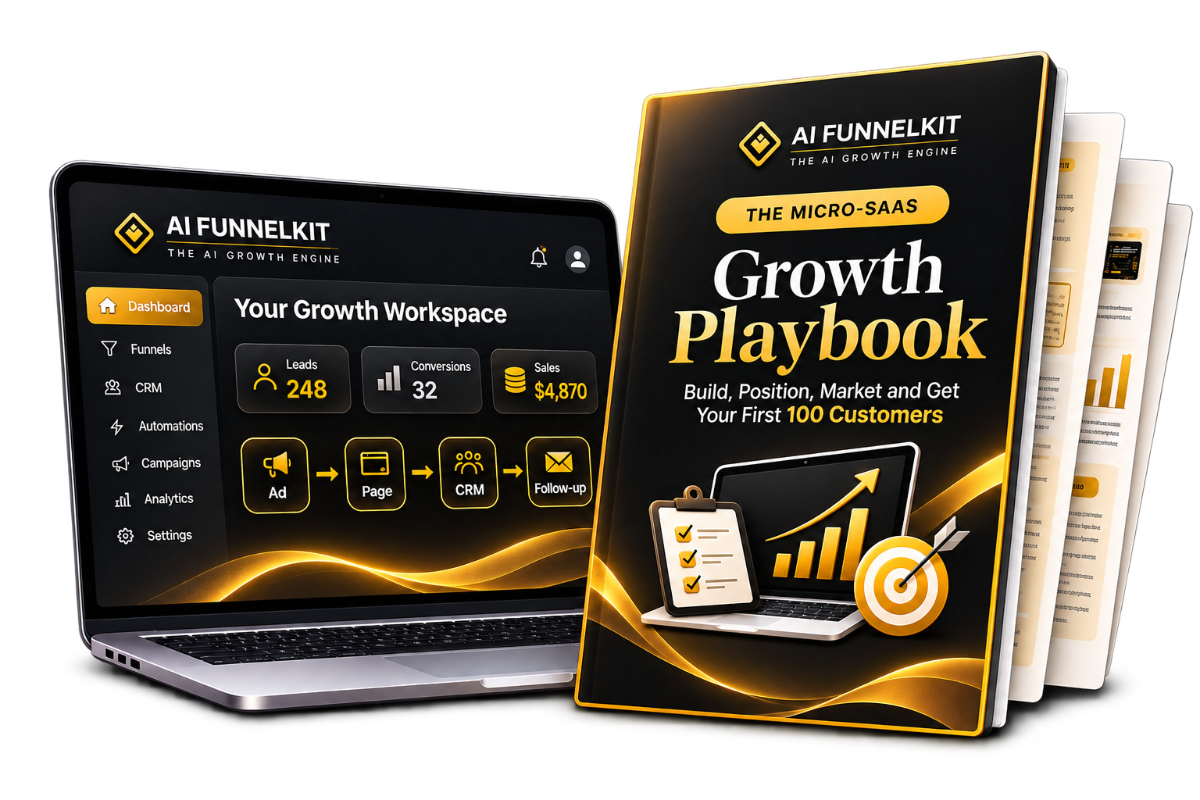
You don’t have to build your own product to start. Chapters 01, 02 and 11 show you how to sell a ready-built product — the FunnelKit engine — under your own brand: the business model, choosing what to sell and who needs it, and selling to your first clients.
A working product is an important milestone, but it is not the same as a working business. A product can be technically impressive and still struggle to attract customers because the audience is unclear, the problem is not urgent, the offer is difficult to understand, or the path from first visit to purchase is confusing.
The gap between building and selling
Most Micro-SaaS failures that look like “marketing problems” are, on inspection, one of four earlier problems. Fix them in this order.
“Everyone who needs productivity” is not an audience. No one recognises themselves in it.
Real but not urgent, frequent or expensive — or solved well enough by a spreadsheet.
The buyer cannot tell in 10 seconds what they get, what it costs, and why it beats today.
Ad promises one thing, page says another, form asks too much, no one follows up.
A simple operating principle
The first-customer mindset
Your first 100 customers are not a promise or a deadline. Expect the first route to be manual, imperfect and partly unscalable. Do the unscalable work first, learn what customers actually value, and only then automate it.
Worked example — used throughout this guide
Imagine a Micro-SaaS that sends appointment reminders for independent physiotherapy clinics. Every framework in Chapters 00–14 is illustrated against that concrete case — replace it with your own niche as you work.